
Financial Workflow: What It Is and How to Automate Processes with Governance
Understand what a financial workflow is, how to structure automated processes with control and traceability, and why isolated automation is not enough.
Financial Workflow: What It Is and How to Automate Processes with Governance
Automation is already a priority for most finance teams. But the real challenge is not just speeding up tasks — it is building a financial workflow that keeps the process under control.
A financial workflow connects ERP, bank, approvals, AI, documents and dashboards in a single operational flow. It is not a loose collection of automations. It is the orchestration that makes finance scalable, auditable and resilient.
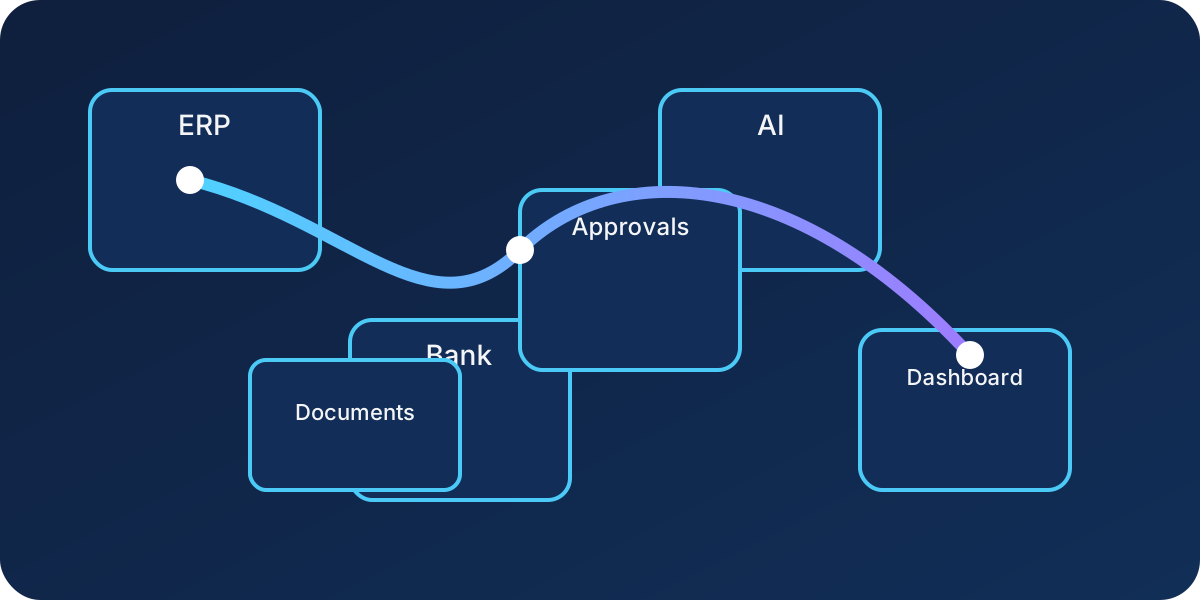
“The problem is not the lack of automation. It is the lack of workflow.”
Why financial workflow matters more than isolated automation
When a company automates only pieces of a process, hidden gaps persist. A robot can post an invoice to the ERP. A script can send an email. But without workflow, the operation still misses:
- true visibility over process status,
- standardized exception handling,
- a complete audit trail of who did what,
- operational governance between systems.
In practice, this means the operation looks automated, but people still must close the loop.
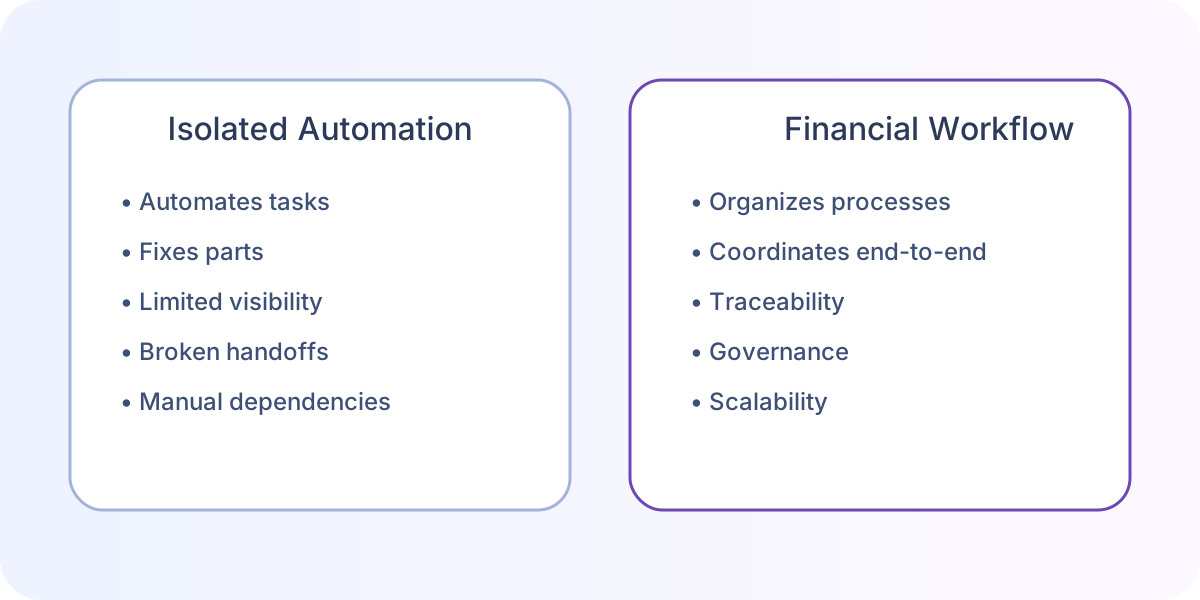
Automation vs Workflow
| Isolated automation | Financial workflow |
|---|---|
| Automates tasks | Organizes processes |
| Fixes parts | Coordinates end-to-end |
| Limited visibility | Traceability |
| Broken handoffs | Operational governance |
| Manual dependencies | Scalability |
What is a financial workflow?
A financial workflow is the structure that defines how financial processes happen. It goes beyond task automation and answers:
- which steps exist in a process,
- which order they should run,
- which rules and approvals are required,
- which systems need to talk to each other,
- how to handle exceptions,
- how to record logs and traceability.
In short, a financial workflow is the model that turns automation into controlled, end-to-end finance operations.
How a financial workflow works in practice
A well-designed financial workflow connects multiple stages and systems with clear rules. For example, an accounts payable process may look like this:
- invoice receipt by email or portal,
- AI extracts document data,
- supplier and cost center validation,
- financial approval,
- ERP posting,
- payment scheduling,
- dashboard status update,
- exception handling and historical storage.
That sequence is a horizontal flow where each step feeds the next. The goal is not just to automate tasks, but to ensure the entire process is traceable and governed.
Accounts payable workflow example
Receives invoice → AI extracts data → validation → approval → ERP → payment → dashboard/status
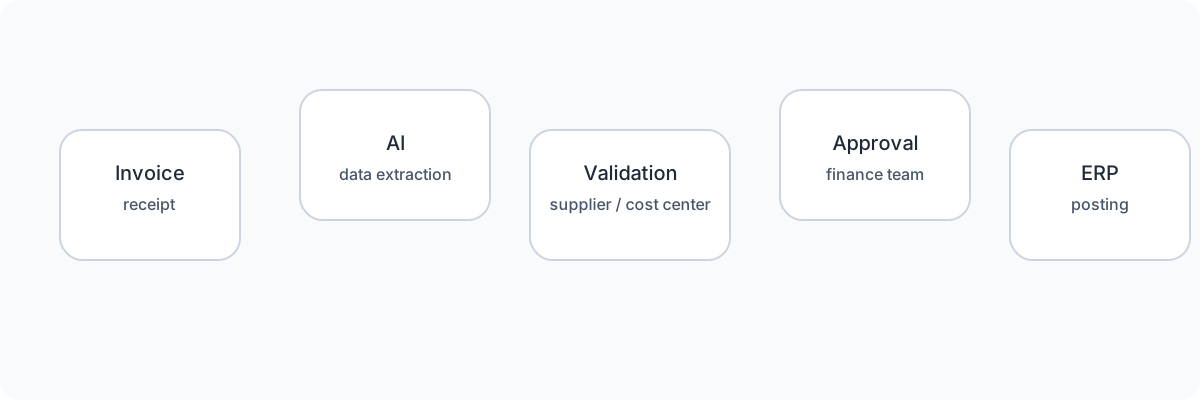
This is a classic financial orchestration example: it is not enough to have AI or ERP alone. All points must communicate and leave a record.
Signs of false automation
A process can look automated and still be fragile. Watch for:
- an “automatic” flow that someone still has to run manually,
- approvals happening in WhatsApp,
- parallel control spreadsheets,
- failures without traceability,
- dependency on specific people.
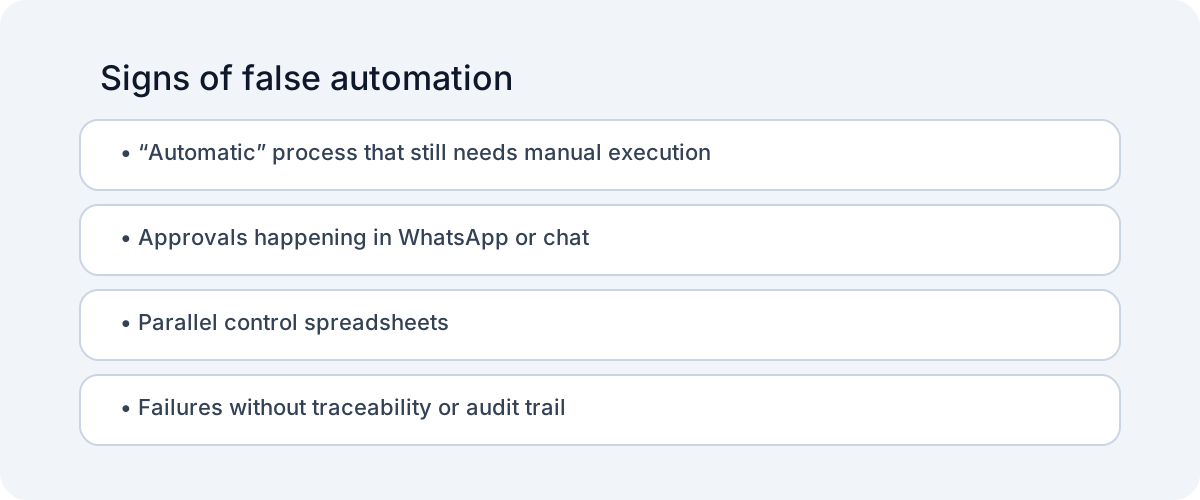
When these signals appear, finance automation is just another layer of operational risk — not a real workflow.
Why many finance automations fail
Many automation projects start by solving visible manual work. As the operation grows, problems emerge such as:
- broken processes between systems,
- exceptions with no treatment,
- approvals outside the flow,
- conflicting information,
- missing logs,
- lack of traceability,
- dependence on tacit operational knowledge.
This is the typical scenario of a partly automated process that is hard to control. Finance automation must be part of a workflow to deliver governance and scalability.
The role of AI in financial workflows
AI does not replace workflow. It strengthens workflow. In finance, AI works well for activities such as:
- document reading,
- invoice classification,
- data extraction,
- contextual validation,
- text analysis,
- inconsistency detection,
- decision support.
But someone still needs to control execution, apply rules, integrate systems, record logs, route exceptions and ensure governance. The best outcomes happen when AI and structured workflows work together.
What a modern financial workflow needs
As financial processes become more complex, some elements become essential:
- system integration: ERP, banks, tax authorities, CRM, payments and internal tools must communicate without manual exports.
- exception handling: the workflow should manage inconsistencies, pending approvals and missing data.
- traceability: every decision must leave a history of who approved, when, which rule applied and which system executed the action.
- operational visibility: finance needs to see what is pending, stalled, approved, rejected or in progress.
- operational flexibility: financial flows change constantly, so the workflow must evolve without long development cycles.
Financial workflow is more than operational efficiency
In finance, the value of a workflow goes beyond saving time. When workflows are well built, the company gains:
- more operational predictability,
- less reliance on specific people,
- faster closing cycles,
- stronger auditability,
- fewer errors,
- better governance,
- greater operational scale.
The outcome is that finance stops operating by improvisation and starts operating with real control.
How Abstra helps build financial workflows
Abstra enables teams to build financial workflows that integrate AI, Python, ERPs, banks and operational systems in a single controlled flow. In practice, companies use the platform to:
- automate accounts payable and receivable,
- structure financial approvals,
- connect banks and ERPs,
- automate reconciliations,
- organize financial closings,
- process documents with AI,
- build end-to-end operational flows with traceability.
The focus is not only on financial automation but on full process orchestration: with rules, exceptions, logs, integrations and operational visibility.
Conclusion
The next level of finance automation is not just doing tasks faster. It is structuring workflows that coordinate complete processes with control, traceability and scale.
Because the real problem in modern finance is rarely a lack of automation. Most of the time, it is a lack of workflow.
Frequently Asked Questions
What is a financial workflow?
A financial workflow is the controlled sequence of steps, rules, integrations and approvals that ensures a financial process happens consistently and traceably.
What is the difference between workflow and automation?
Automation handles isolated tasks; workflow organizes the entire process, connecting steps, systems, rules and exceptions.
How do you automate financial processes?
Start by mapping the real flow, identify exception points, integrate systems, and apply automation within a workflow with governance.
What is financial orchestration?
Financial orchestration is the coordination of ERP, banks, AI, approvals and reporting so the process works as a unified operation.
How do you use AI in financial workflows?
Use AI to extract data, validate documents, classify information and flag inconsistencies — always inside a flow that records decisions and handles exceptions.
Does a financial workflow replace the ERP?
No. A financial workflow integrates the ERP into the process; it does not replace the ERP, but makes it part of a larger, governed flow.
How do you improve financial governance with automation?
Improve governance by automating decision records, integrating systems, applying clear rules and keeping visibility over status throughout the process.
Is your finance operation automated or just full of isolated automations?
Check your financial maturity
See how companies are structuring financial workflows by integrating AI, ERP and banks into a single operational flow.
Abstra Team
Author
Subscribe to our Newsletter
Get the latest articles, insights, and updates delivered to your inbox.