
Automated Accounting Close: How to Scale Financial Close with AI
Understand how automated accounting close works, the main financial close bottlenecks, and how to integrate AI, ERP and workflows for better control and scale.
Automated Accounting Close: How to Scale Financial Close with AI
Most companies have already automated parts of finance. Reconciliations. Payments. ERP imports. Reports. Integrations.
But one process still concentrates parallel spreadsheets, manual checks and operational dependencies: the accounting close. Close is not a single task. It is a chain of dependencies.
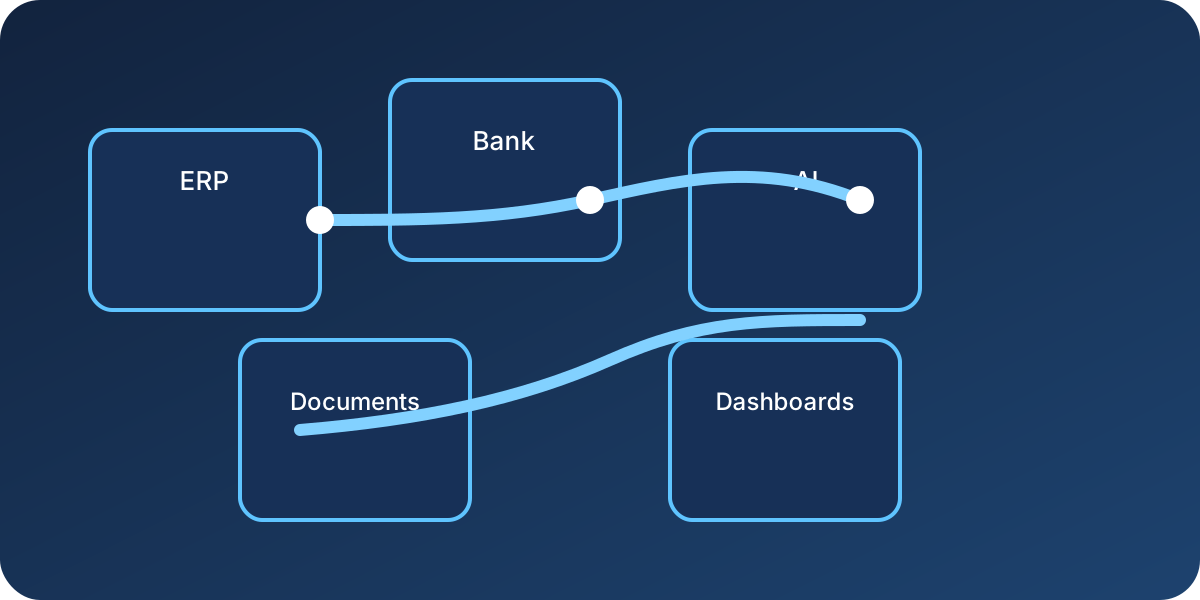
The problem is that many companies try to automate isolated parts of the close without organizing the full operational flow. The result: finance may have automation, but the close remains slow, hard to follow and overly dependent on specific people.
What is automated accounting close?
Automated accounting close is the structuring of the financial close process using workflows, integrations and automated rules to reduce manual work, inconsistencies and operational dependence.
In practice, this means automating:
- data collection,
- validations,
- reconciliations,
- approvals,
- system integrations,
- operational monitoring,
- report generation,
- exception handling.
But the main point is not just speed. It is control. Because close depends directly on the operational reliability of earlier processes.
The problem with traditional accounting close
In most companies, close still relies on activities such as:
- exporting spreadsheets,
- consolidating reports manually,
- matching entries across systems,
- validating cost centers,
- reviewing accounts,
- tracking open items by email or WhatsApp,
- chasing approvals,
- redoing reconciliations.
And as the company grows, this becomes even more complex. Close starts to depend on:
- multiple ERPs,
- banks,
- tax platforms,
- internal systems,
- different operational teams,
- high transaction volumes.
The problem stops being “lack of automation”. It becomes lack of operational orchestration.
Why automating tasks does not solve close
This is one of the biggest mistakes in finance automation projects. A company may automate:
- bank imports,
- accounting entries,
- invoice capture,
- report creation.
Yet still struggle with close. The real bottleneck is usually between the steps.
A report can be generated automatically, but someone still needs to:
- validate inconsistencies,
- review divergences,
- approve adjustments,
- consolidate information,
- chase responsible areas,
- monitor close status.
In that scenario, the task was automated. But the process remains manual. And this causes:
- rework,
- delays,
- loss of visibility,
- operational risk,
- reliance on specific people,
- audit difficulty.
How automated accounting close works
An automated close typically connects different flows within a single coordinated operation.
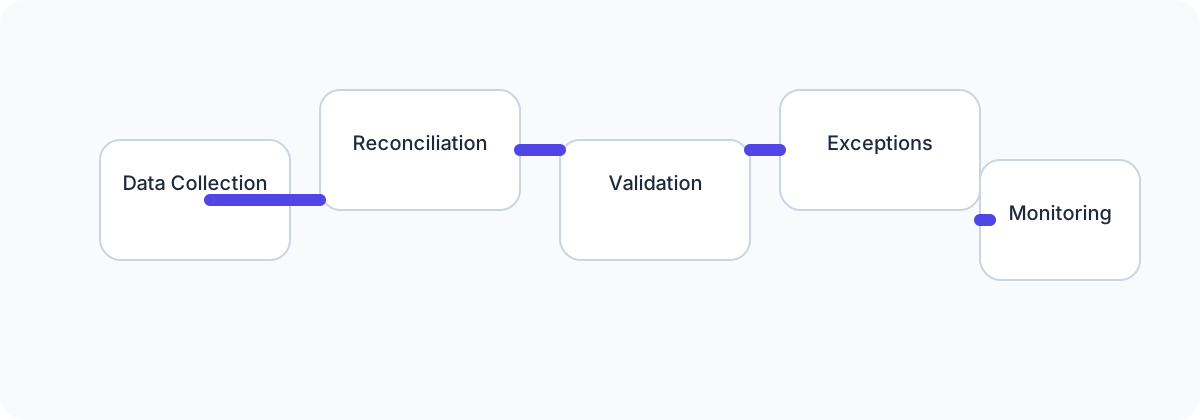
1. Automatic data collection
The workflow pulls information from ERP, banks, spreadsheets, tax platforms and internal systems — without relying on manual exports.
2. Automated reconciliations
The system matches payments, statements, entries, receivables, provisions and accounting movements and automatically flags discrepancies.
3. Rule validation
The workflow applies rules like mandatory cost centers, valid accounts, pending approvals, missing documents and tax inconsistencies.
4. Exception handling
Not every close ends cleanly. Modern workflows automatically route open items, discrepancies, adjustments, approvals and operational failures to the right people.
5. Real-time monitoring
Finance teams see stage status, open items, delayed processes, exceptions, owners and close indicators. This dramatically reduces “working in the dark.”
Where AI fits in the accounting close
AI gains traction in the most analytical and operational close stages. It helps with:
- document reading,
- accounting classification,
- discrepancy detection,
- textual validation,
- justification analysis,
- tax data extraction,
- operational review support.
But an important point remains: AI does not replace operational close control. It complements it. The process still needs workflows, rules, approvals, logs, integrations, traceability and governance.
What companies gain with automated close
Beyond operational reduction, companies usually gain:
- faster financial close,
- fewer manual errors,
- less rework,
- more predictability,
- better governance,
- lower operational dependency,
- easier audits,
- better traceability,
- greater analytical capacity in finance.
The important effect is that finance spends less energy organizing information and more time analyzing it.
Signs close is still too manual
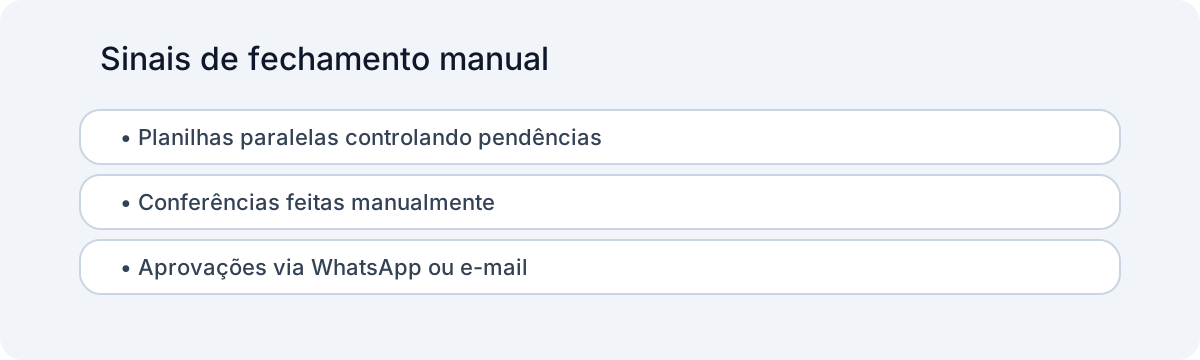
Common signs include:
- parallel spreadsheets tracking open items,
- manual reconciliation checks,
- approvals via WhatsApp,
- difficulty understanding close status,
- reliance on specific people,
- repeated rework in close,
- manual consolidation across systems,
- lack of logs and operational history.
In practice, this usually indicates isolated automations — not a structured close workflow.
The role of governance in financial close
The bigger the operation, the more important close governance becomes. Because it is not enough to “close fast.” It is necessary to ensure consistency, traceability, operational history, clear rules, exception control and auditability. And that requires much more than isolated scripts or point automation. It requires a coordinated operation.
How Abstra helps companies automate accounting close
Abstra enables structured financial workflows that integrate AI, Python, ERP, banks and internal systems within a single operational flow. Companies use the platform to:
- automate reconciliations,
- organize close workflows,
- integrate multiple systems,
- process financial documents,
- create structured approvals,
- monitor open items,
- automate validations,
- generate operational dashboards,
- apply accounting and financial rules.
All with a focus on control, traceability, governance and operational flexibility.
Conclusion
The accounting close does not stall only because of too much manual work. Most of the time, it stalls because the operational flow remains fragmented.
The next level of financial automation is not just automating isolated tasks. It is structuring workflows capable of coordinating the entire close with visibility, control and scale.
Because closing faster is important. But closing with governance is what really sustains operational growth.
Abstra Team
Author
Subscribe to our Newsletter
Get the latest articles, insights, and updates delivered to your inbox.